
Buying a 30-Inch Induction Range: Compare Functions Before Confirming the Specification
Separate confirmed functions from optional requests. Use a model-specific comparison and sample-review worksheet before accepting a quotation.
Download buyer worksheetExplore the reference model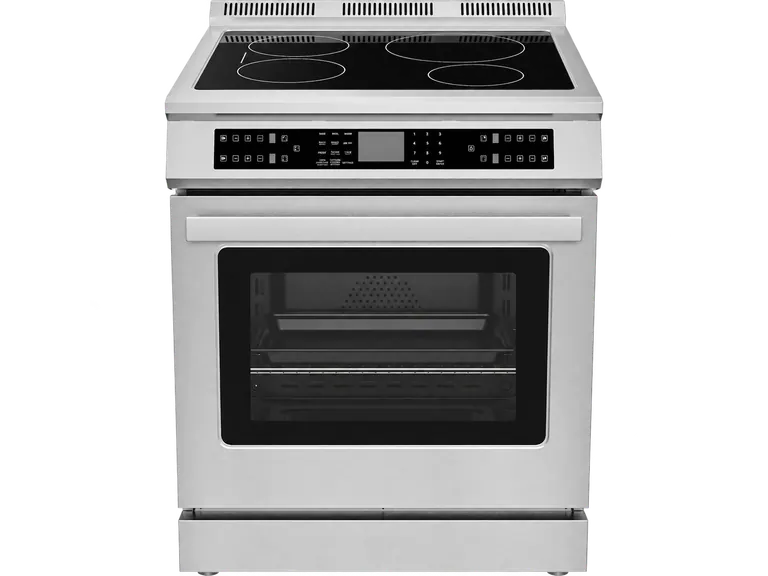
A 30-inch induction range combines an induction cooking surface with an oven. It is not the same product as a standalone induction cooktop. A useful comparison separates cooktop performance, oven functions, controls, installation requirements and optional features before comparing quotations.
Use an exact model as the reference
Chinethai’s product information identifies DK304-CBD-01B as a 30-inch induction range with full touch control, four heating zones and a 142 L / 5.0 cu.ft. oven. The listed electrical configuration is 240V / 60Hz.
These details provide a starting reference, not confirmation that every requested feature or market configuration is available. Obtain the current specification for the exact offered variant before approving a quotation or sample.
Build a feature comparison that separates facts from requests
| Area | Reference information | What the buyer should confirm |
|---|---|---|
| Cooking surface | Four induction heating zones are listed | Zone layout, cookware fit, power settings and simultaneous-use behavior |
| Controls | Full touch control is listed | Interface layout, language, lock functions and operating instructions |
| Oven | 142 L / 5.0 cu.ft.; bake, broil, convection, air fry and self-clean modes are listed | Exact mode definitions, included accessories and the agreed evaluation procedure |
| Electrical setup | 240V / 60Hz is listed | Nameplate rating, connection arrangement and installation requirements for the offered variant |
| Additional features | Not established by the reference information below | Treat bridge zones, Wi-Fi, app control and a food probe as separate requests |
Label each requested function as confirmed in the offered configuration, subject to review, or not offered. An unconfirmed field should not silently become part of the specification.
Avoid confusing similar terms
A temperature sensor used inside the appliance does not, by itself, establish that a food probe is supplied. Likewise, a touchscreen does not imply app connectivity. Ask how each function works and what the sample will demonstrate.
Do not treat different cleaning functions as interchangeable. Confirm the named mode, operating instructions and any installation implications for the exact configuration. If a requested function differs from the reference model, ask whether it requires a variant review or a development project.
Confirm fit and market requirements together
Provide the installation opening, surrounding cabinetry, target country and required electrical configuration. Ask for a dimensioned drawing and installation instructions rather than relying on the “30-inch” category name alone.
Review certification information against the offered model and variant. A family-level label is not enough to approve a different electrical configuration or feature set.
Turn a feature request into a sample-review question
Instead of asking only “Does it have air fry?”, record the proposed mode, included tray or accessory, operating instructions and the demonstration you want to review. For a requested food probe, ask whether one is supplied, which modes use it and how the interface displays its reading. For connectivity, ask what is actually supported in the intended market and which functions remain available without a connection.
These are questions for a supplier review, not claims that the reference model provides those features. Ask the supplier to identify unavailable functions explicitly before sample preparation.
A simple comparison sheet for two offers
| Requirement | Buyer priority | Offer A | Offer B | Evidence needed |
|---|---|---|---|---|
| Installation fit | Essential or preferred | Exact drawing revision | Exact drawing revision | Dimensions and installation instructions |
| Cooking and oven functions | Essential or preferred | Confirmed / open / not offered | Confirmed / open / not offered | Specification and agreed demonstration |
| Electrical configuration | Essential | Offered variant | Offered variant | Nameplate and applicable documents |
| Optional functions | Rank individually | List each function separately | List each function separately | Written confirmation and evaluation scope |
| Commercial scope | Define before comparison | Included and excluded items | Included and excluded items | Quote, accessories, packaging and sample conditions |
A hypothetical buyer who does not require connected controls may find a non-connected proposal worth reviewing. A buyer for whom connectivity is essential should keep it as an explicit selection condition. Neither choice should be driven by an assumed feature hidden behind the word “smart.”
Can the listed model be assumed to support another voltage or frequency? No. Request a review of the exact proposed configuration and supporting documents.
Should every desired feature be mandatory? Separate launch-critical functions from preferences. This helps compare a suitable existing model with a potential modification without assuming either route is available.
Review the range product family, then submit an RFQ with the reference model, must-have functions, target market and estimated volume. Final specifications, certification evidence, MOQ, samples and lead time are confirmed by model and RFQ requirements.
FAQ
Does touch control imply Wi-Fi or a food probe?
No. Confirm each requested function separately for the exact offered configuration.
Can I download a comparison worksheet?
Yes. The buyer worksheet provides fields for requirements, supplier responses and unresolved questions.
Take the comparison into your next review
Use the fillable worksheet to separate essential requirements, confirmed functions and open questions.
Download the worksheet Discuss your requirements