
Beyond the 96% Label: What Makes a Gas Furnace Worth Specifying?
An efficiency rating can earn a place on the shortlist. The right configuration, clear model data and supporting documents help complete the buying decision.
Explore CFGH96 Gas FurnaceDiscuss your requirements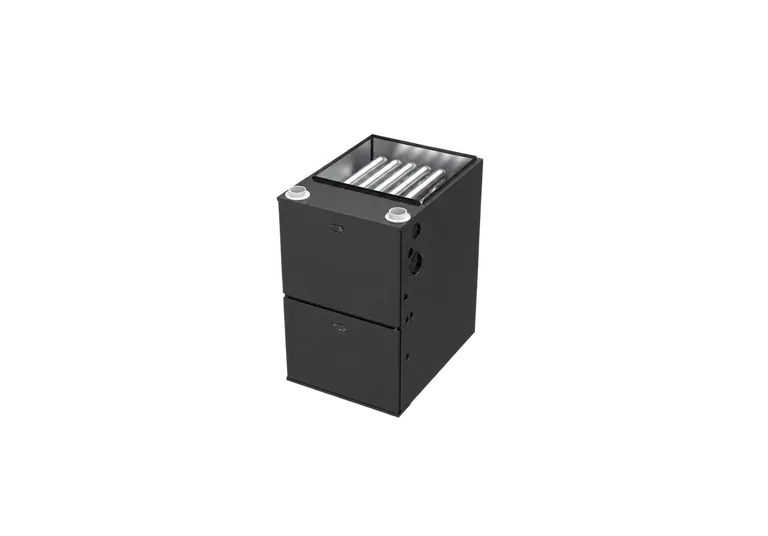
An efficiency rating can earn a place on the shortlist. It cannot finish the buying decision.
Two furnace proposals arrive on a buyer's desk. Both carry a 96% AFUE headline. Both look credible in a product photograph. Yet one may be much easier to evaluate for the intended market, installation and service channel.
The difference is not necessarily a more impressive percentage. It may be a clearer model specification, a better-matched configuration or a more complete set of supporting documents.
For HVAC distributors and equipment buyers, the question is therefore not simply, “Is 96% efficient?” It is, “What does that rating tell us—and what must we still establish?”
Understand the number before building a sales story around it
AFUE stands for Annual Fuel Utilization Efficiency. It expresses useful heating output relative to fuel-energy input over a heating season under the applicable rating method. The U.S. Department of Energy uses AFUE to compare furnace efficiency, while treating output capacity and installation considerations as separate parts of the purchasing decision. DOE furnace purchasing guidance
A 96% AFUE rating is not a promise that a household's total energy bill will fall by a particular percentage. It does not establish the building's heating demand, local fuel price, installed system performance or blower electricity consumption.
This distinction makes the sales message more useful. Efficiency is an equipment characteristic to verify, not a ready-made savings figure to attach to every customer.
Look for the engineering behind the headline
The CFGH96 brochure lists an aluminized-steel tubular primary heat exchanger and a stainless-steel secondary heat exchanger, alongside a 96% AFUE rating. Those are concrete product details that give a technical reviewer something to examine beyond the cabinet exterior.
They should lead to a focused discussion: Which exact model does the rating cover? What supporting performance documentation is available? Which installation and operating conditions apply? What maintenance and inspection information accompanies the offered equipment?
Material descriptions alone do not establish a service life, corrosion warranty or maintenance interval. Those claims require their own evidence. The opportunity is to explain the construction accurately, then support the buyer's review with the right documents.
Keep heating input and heating output in separate columns
An “80,000 BTU furnace” can be an incomplete description. Does the number refer to fuel input or heating output? Is it a high-fire value or a low-fire value?
For example, the CFGH96 brochure lists CF96U080B3A with 80,000 BTU/h high-fire input and 76,000 BTU/h high-fire output. The listed low-fire figures are 52,000 BTU/h input and 49,000 BTU/h output.
These figures should be carried into a comparison as separate fields. The listed firing-rate output-to-input ratios also should not be substituted for the seasonal AFUE rating; they describe different information.
Clear labels help prevent a sourcing shorthand from becoming a sizing assumption. A qualified professional must determine the required equipment capacity for the application.
Ask whether the proposal is complete enough to compare
Before choosing between two apparently similar furnaces, bring the following information onto the same page:
| Decision area | What a useful proposal identifies |
|---|---|
| Efficiency | Exact model, stated rating and supporting performance evidence |
| Heating capacity | High- and low-fire input and output, with units |
| Air movement | Blower configuration and applicable airflow information |
| Installation | Approved orientation, dimensions, clearances and venting documentation |
| Commercial scope | Offered configuration, included items and unresolved requests |
The purpose is not to make buying more complicated. It is to ensure that two quotations describe comparable equipment and responsibilities.
Turn the rating into a credible product story
A useful story for CFGH96 combines its brochure-listed 96% AFUE with two-stage heating, a multi-speed ECM blower and the configuration questions that matter to the buyer. That is more substantial than repeating “high efficiency” across every paragraph.
It also leaves room for the right commercial discussion. A distributor may value a focused model range and clear documentation. A product team may need to review controls, packaging or a market-specific variant. Neither need can be answered by the AFUE number alone.
Review the CFGH96 model comparison and bring your target-market requirements into an RFQ. Specifications, certification evidence, samples, MOQ and lead time are confirmed by exact model and RFQ requirements.
FAQ
Does 96% AFUE guarantee a specific reduction in energy bills?
No. The rating does not establish a building’s heating demand, local fuel price or installed system performance.
Are heating input and heating output the same figure?
No. Compare the separately listed input and output at each firing rate, and use a qualified application review to select capacity.
Put the product into your sourcing review
Explore the CFGH96 models, then share the target market, application, fuel and electrical requirements for an exact-model review.
Compare the specification models Start a Gas Furnace RFQRelated reading: Six Models, One Clearer Conversation: Building a Gas Furnace Range Buyers Can Understand